
Casino Round Cancellation: Which Circumstances Are Covered by Void-Bet Terms?
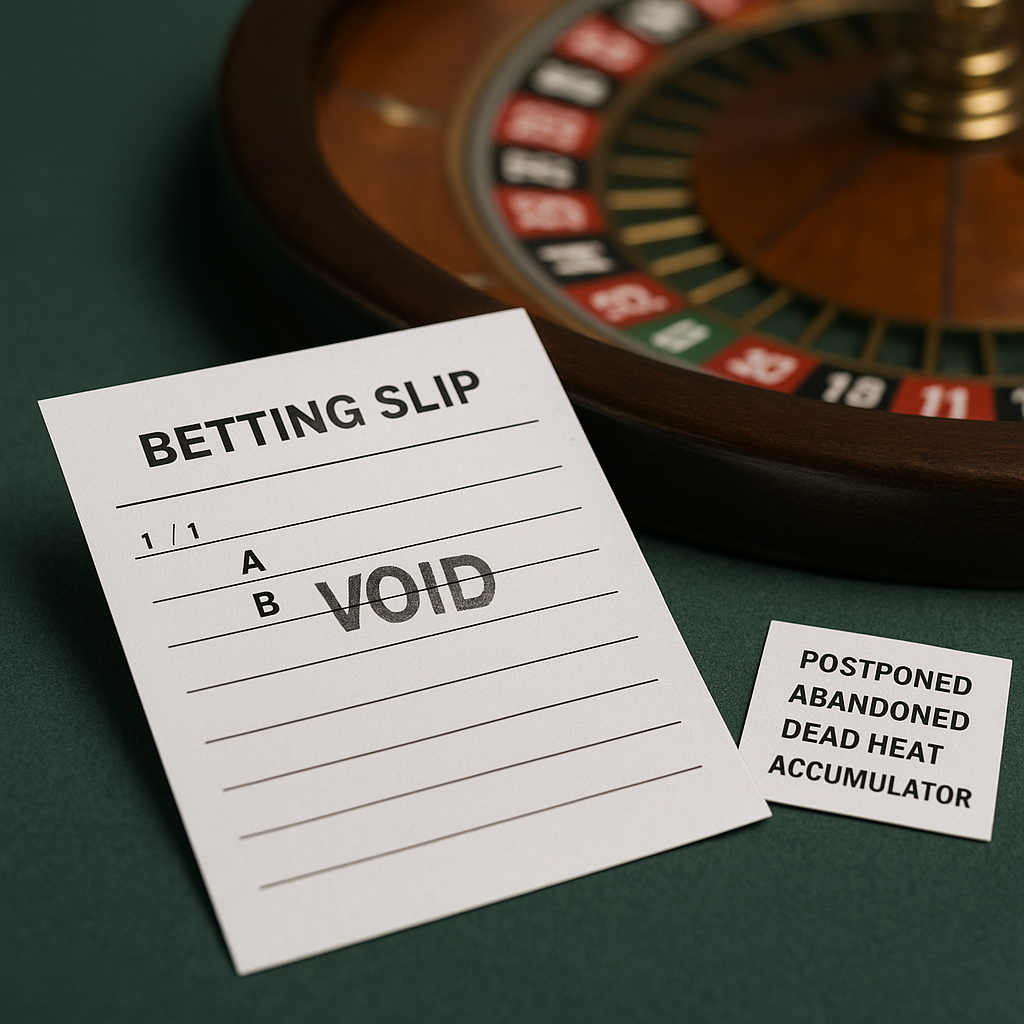
Casino Round Cancellation: Which Circumstances Are Covered by Void-Bet Terms?
“Cancellation” can mean different things: a casino round interrupted by a technical fault or a sports market that cannot be settled as planned. For readers comparing the terminology used by a Rajbet online casino with bookmaker rules, the distinction matters. A void bet is a settlement decision, not a promise to refund every wager affected by a disruption.
In sports betting, the operator’s terms explain when a wager stands, is settled on an outcome already known or is declared void. The rules vary by bookmaker, sport and market, so a postponement or abandonment does not automatically void every bet. Published on 5 October 2026 and updated on 16 October 2026, this article covers common principles without assuming the terms of a particular operator.
Analysis of teams or players
This article does not discuss specific teams, players, fixtures, results or squad news. Without a named event, the focus is on how markets are settled, not on form, tactics or an individual competitor’s prospects.
The first question is what the bet covers. A wager on the final result may depend on the match reaching a specified point or being completed. A market such as first scorer or a completed set may already have a recognised outcome. So even if a fixture is abandoned, not every market on it will necessarily be treated the same way.
Separate the event from the selection. A match might be postponed while a market on a completed period remains settled. Or the match might go ahead, but a bet on a particular player could be void because that player did not take part. The bookmaker’s terms—not the general description of the disruption—determine the outcome.
Key factors
Postponements: Terms often set a time window for when a rearranged match must begin or be completed. If it falls within that window, bets may stand and be settled on the rescheduled event. If it falls outside, affected wagers may be void. The deadline and definition of a postponement vary by operator and competition.
It also matters whether the match is delayed on the same day or moved to a later date. A brief interruption does not necessarily count as a postponement under the rules, and a change of venue does not automatically invalidate a market. Check the clauses on rescheduling, venue changes and abandoned fixtures rather than relying on news reports alone.
Abandonment or cancellation: If play starts but does not finish, the terms may distinguish between markets with an outcome that is already determined and those that remain unresolved. Some markets may be settled if the relevant result is official; others may be void if the match does not reach a specified stage. An official result awarded later by the competition may also matter if the bookmaker’s rules refer to it.
Non-starters and participation: Player markets often have their own participation rules. A bet may be void if the player does not start or take part, but the rules vary by sport and market. In some cases, even brief participation is enough for the wager to stand. A substitute or a change to the starting line-up does not, by itself, determine how every related bet will be settled.
Dead heats: If competitors tie for a position, the winning portion of the stake may be reduced. For example, if two competitors share one winning place, half the stake may be settled at the quoted odds as a win, with the other half treated as a loss. The calculation depends on the market and the bookmaker’s rules. A dead-heat adjustment is not usually the same as voiding the entire wager.
Accumulators: Many rulebooks treat a void leg as odds of 1.00, leaving the remaining selections to determine the return. If every leg is void, the stake is generally returned. A dead-heat adjustment may instead reduce the effective stake on one leg, changing the combined return without cancelling the whole ticket. These are common approaches, not guarantees for every operator or product.
Separate rules may cover palpable errors, event integrity concerns or technical failures. These may allow a bookmaker to correct or void a market, but they are distinct from ordinary postponement rules. A casino round interrupted by a connection or system fault is governed by separate terms. Its game record, state and settlement process should not be assumed to follow sportsbook rules for an abandoned match.
Scenario: how a disrupted match can settle
Imagine an accumulator with a match-winner selection, a player-to-score bet and a selection on another fixture. The first match is postponed before kick-off and rescheduled beyond the operator’s stated window. The player does not appear when the match eventually takes place, while the other fixture is completed as planned.
One possible outcome is that the match-winner leg is void at odds of 1.00 and the player selection is also void under the participation rules. The selection on the other fixture remains active, so the accumulator’s return depends on that leg. If it wins, the return is calculated using its odds; if it loses, the accumulator loses. The published terms determine the actual settlement.
Change one detail and the result may differ. If the match began and a relevant market was decided before play stopped, that market might stand while unresolved selections are void. If two competitors tie for a winning place in a separate market, a dead-heat adjustment may apply instead. Settlement depends on the specific selection and rule, not on a single all-or-nothing verdict for the event.
Conclusion
Void-bet terms cover defined circumstances, not every disruption that seems unfair or unusual. Postponement windows, abandonment thresholds, participation conditions, dead-heat calculations and accumulator rules can all affect settlement. Each must be considered in the context of the market placed.
The key distinction is between a void wager, a partially adjusted win and a market settled on an outcome already established. A cancelled casino round is a separate matter, governed by casino-game procedures; a sports bet is settled under bookmaker rules. If the wording is unclear, consult the relevant terms and the operator’s formal explanation rather than relying on assumptions based on the event’s headline status.
